Tacomania: My First Test With Sports Photography
Before the Bell
When I think back to Enjoy Wrestling and Beers of the Burgh’s Tacomania in late August, what strikes me first isn’t the photos I took—it’s that I almost didn’t go.
Last year, I showed up with a Canon T6i and a 15–35mm kit lens I’d had for nearly a decade. I drank a beer, felt unsure of myself, and left. I told myself my camera wasn’t good enough, that I wasn’t ready. This year felt different. This was redemption. It was time to stop doubting and start growing Work By Davey through street and event photography in Pittsburgh.
The first test was simple: not having work that Saturday. I thought I’d be stuck shoveling dirt or pouring concrete instead of standing ringside with a camera. But the universe shifted—my schedule cleared. So I walked from East Carson Street to SouthSide Works, heart pounding. I didn’t know if I was ready. I didn’t know if all the money I’d poured into gear would finally pay off or just expose me as a fool chasing a dream.
Wearing a blue Levi’s work shirt and jeans like a rancher going to work, a tan Carhartt WIP backpack slung over my shoulder, I carried my Canon R8, a mini gimbal, and two lenses: the RF 35mm and RF 16mm. My skin burned under layers of sunblock. My thoughts bounced between fear of getting robbed and curiosity—should I take street photos before the event, or save my first shots for the ring?
Wrestling Through the Lens
Tacomania wasn’t just a wrestling event—it was a test of belonging.
It was in the high 80s, one of those humid late-summer Pittsburgh days where the air sticks to your skin. I searched for the perfect spot: shade, proximity, and a clear angle to the ring. As someone visually impaired, I navigate spaces cautiously—but here, every cheer and every slam became a cue. My camera was my second set of eyes.
I started near the CoHatch community area, right where the wrestlers entered. That’s where the test began. I quickly realized I’d need to get closer—without a telephoto lens, every inch mattered. I maneuvered between kids, tipsy fans, and railings, chasing the right frame.
The first few matches—MV Young vs. David Lawless—taught me to trust instinct. I learned how far to crop, how to follow the action, how to anticipate chaos. When MV pinned both Lawless and his manager after a wild no-DQ brawl, I captured the aftermath—the kind of storytelling only wrestling and photography share.
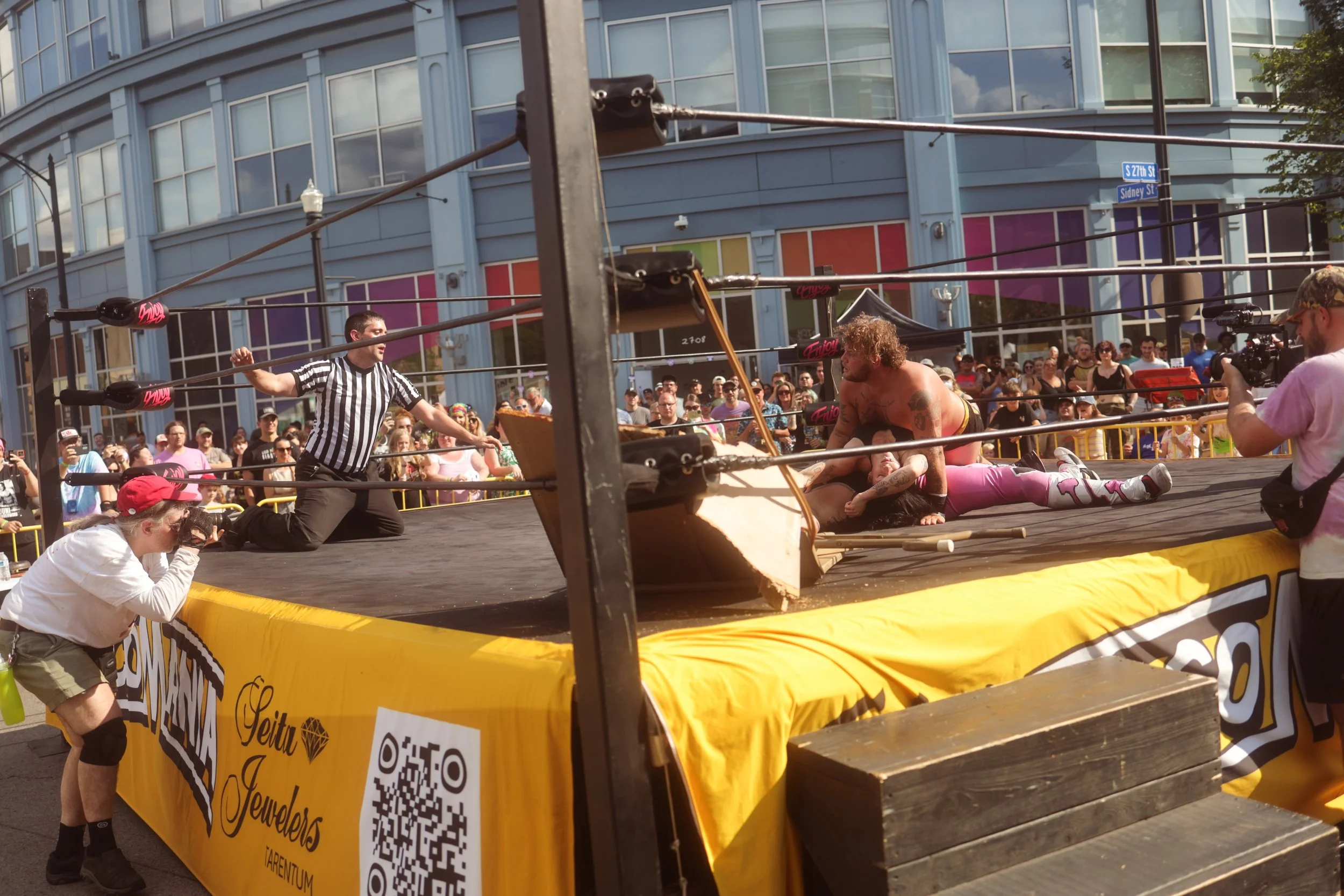
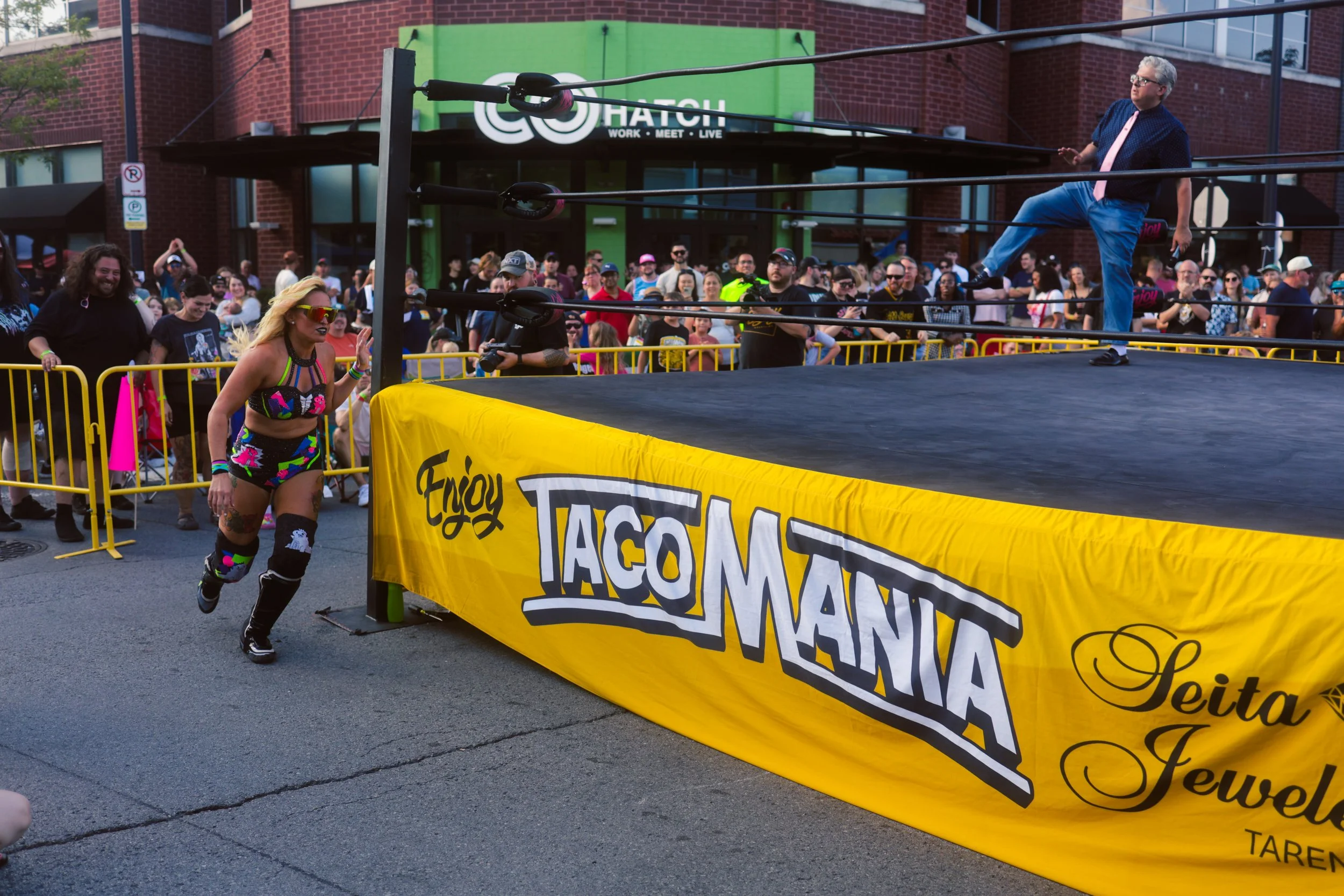
By the third match (Dani Mo vs. Cowpoke Paul vs. Juni Underwood), I found my rhythm. With the sun finally behind me, the shots started to click—literally and emotionally. Dani Mo’s entrance reminded me why I love documenting these moments: movement, confidence, color. I shot continuously, learning that sometimes getting the shot matters more than waiting for the perfect one.
The Story in Strength
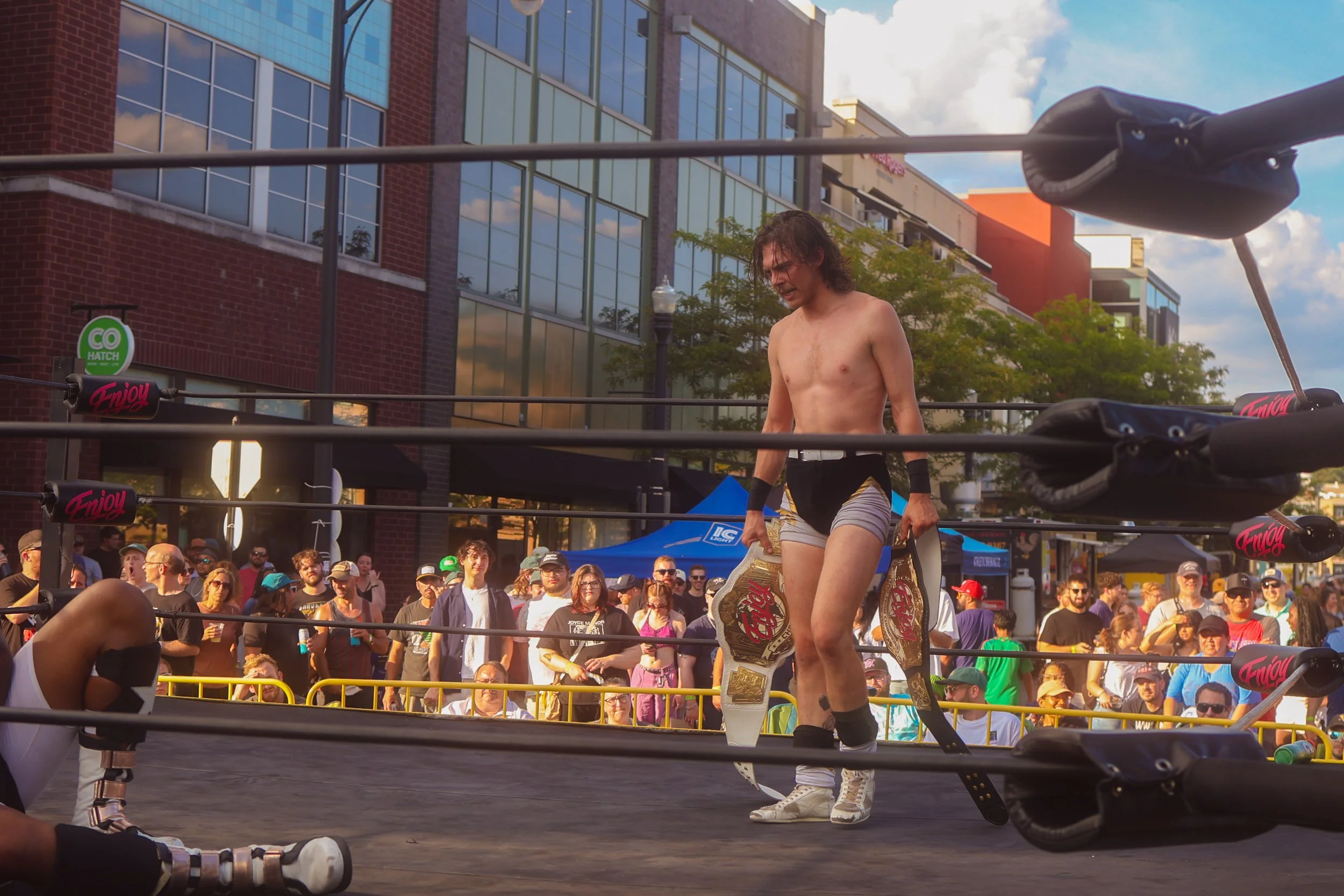
By the fourth match (Mikey Montgomery vs. Ganon Jones Jr.), I saw the story before it happened. Ganon—6’3, muscular, painted eye, gold chains, towel over his shoulder—looked like a star. Mikey, lean and scrappy, in a denim jacket with the Enjoy Wrestling belt, was the perfect underdog.
Their contrast—the powerhouse and the fighter from underneath—made for cinematic frames. I fired away like a basketball player in a three-point contest, trusting repetition and muscle memory. Mikey’s eventual win, both men’s hands raised together, said everything: grit, respect, storytelling.
The Main Event
The Tacomania Battle Royale was chaos and beauty. A sea of bodies, color, and energy—each wrestler fighting for the Tacomania Trophy. I shot entrances like portraits: wrestlers posing, shouting, connecting with the crowd.
Then came Duke Dennis—a monster of a man, 6’5”, sculpted, glowing under the light. Every photo of him felt like a movie still. He didn’t win, but he looked like someone destined for a bigger stage.
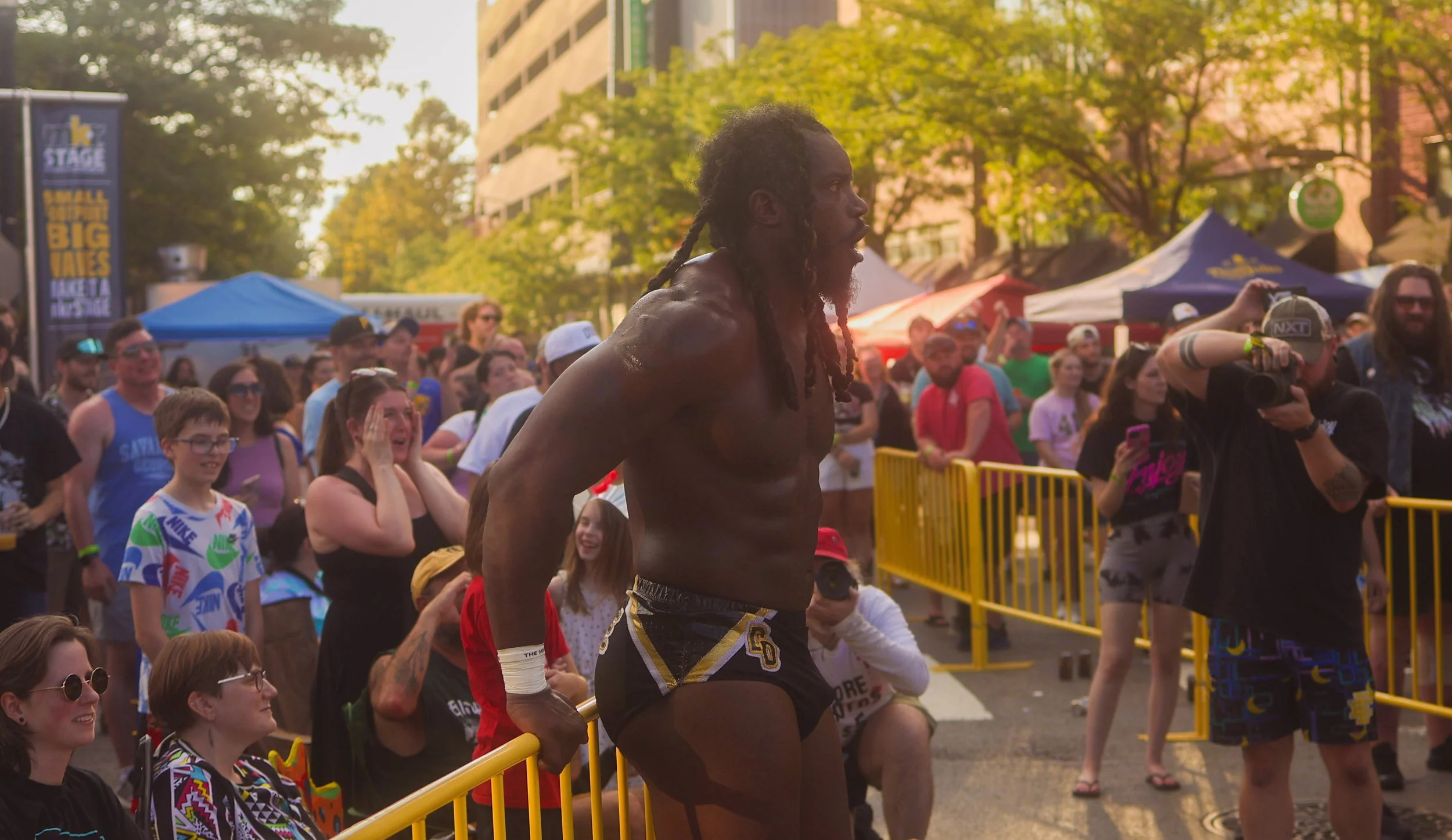
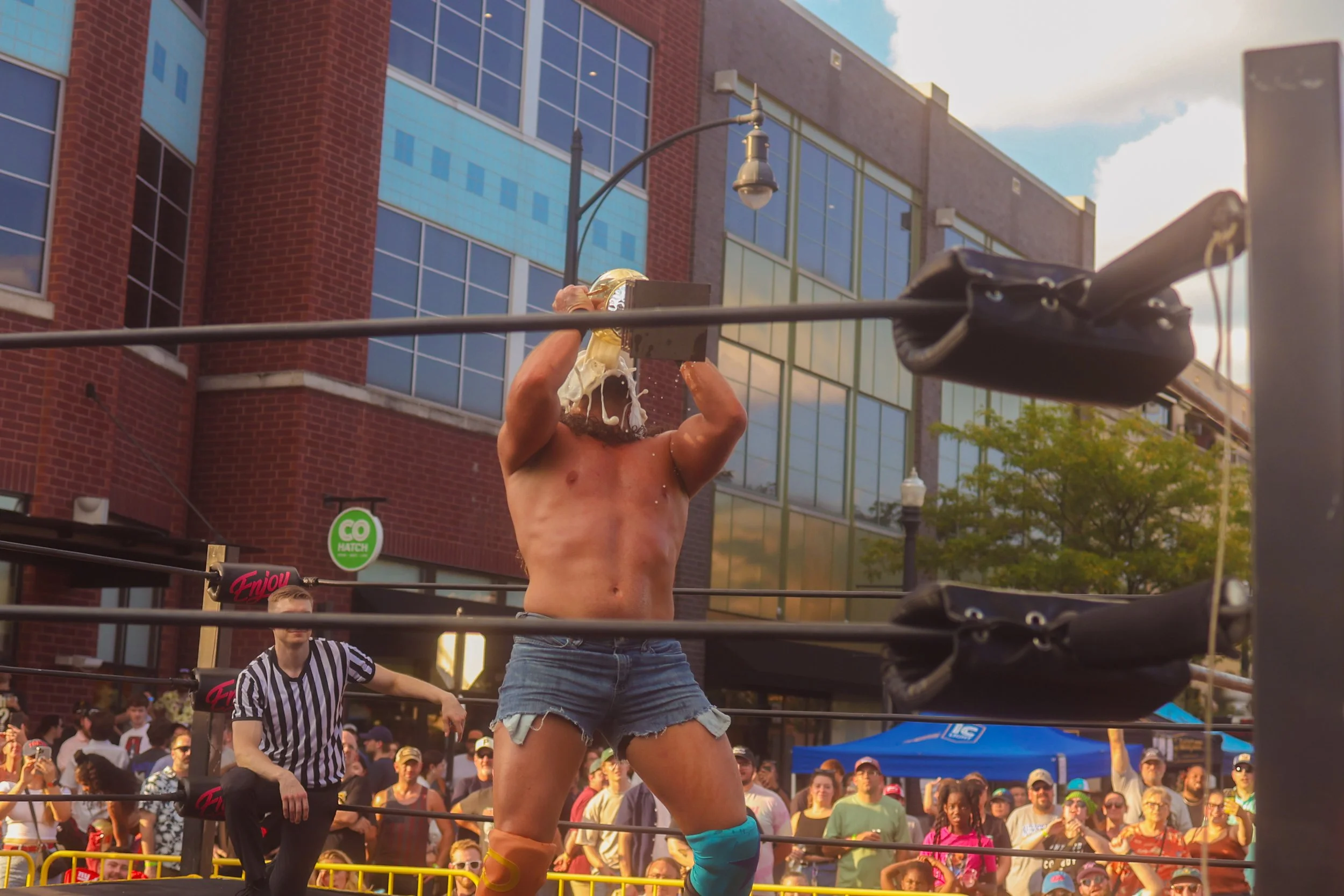
When Andrew Palace won the cup—beer poured into the trophy, chugging it like Stone Cold—I caught the moment of pure joy. Kids stared in confusion, adults roared, and for once, I wasn’t doubting—I was documenting.
After the Bell
Tacomania wasn’t just an event—it was my initiation.
I arrived uncertain if I belonged. I left knowing I did.
It tested my patience, instincts, and technical limits. It showed me what I needed to upgrade, but more importantly, it proved that Work By Davey has a place ringside. Whether it’s Pittsburgh street photography, portrait work, or events like this, my goal remains the same: to capture Sensitive Realism—the raw, honest beauty of ordinary people living extraordinary moments.